Sunday, 29 January 2012

- PPP : Possible Story-line .


·         Setting is established in a Roman Catholic Cathedral, time of international crisis where faith is all that’s left.
o   A real sense of community is reinforced, at the same time made clear that everyone is struggling.
·         A communist dictator (character must being appealing to audience) comes into power overthrowing the current democracy gaining the support of the people offering a simple solution to the complex problems the world has brought on
o   The conversion to communism offers hope to the people of the church, shining a new light on the future.
o   The catholic religion was used for scapegoating, blaming Jesus Christ for not saving his people by now
·         Ordering the abolition of religion, the dictator assigns a group to tear down all evidence of religion.
o   Planning on tearing down the building of Hagia Sophia in hopes of removing the presence of God in the town, the dictator overrules the plans and claims the stripped building as headquarters.
o   Head of the group assigned attempted to object the idea of keeping the building standing, fearing that the building has too much symbolism in its architecture.
§  SPOLIA: the building was made up of other religious artifacts as well
o   To install fear into the citizens, the dictator orders the public execution of the rebel, reinforcing to the citizens that the absence of religion is a demand, and for the better.
·         Meanwhile, person A tries to rally up the Catholics, trying to keep their religion alive but the recent installment of fear left them even more doubtful than before.
·         As the dictator continued to enforce communism, and eliminate religion, more and more people began disappearing, including the daughter of Person A, who attempted to tell a school-boy who God was to her.
·         The spirits that still exist within the building of Hagia Sophia begin taunting the dictator, heightening his paranoia allowing for him to begin second guessing all he’s done to the city.
·         Person A, who is now alone in her attempt to keep God alive, goes to town square to protest the abolition of religion
o   People initially act in ignorance, in fear of the dictator seeing them as a part of the rally
o   People came from apartments, stores, everywhere to see the commotion, all helping them remember what they believed in and why they believed in it
o   Person A is killed by the dictators army
·         The prosecution of person A was the last straw for the dictator. Now possessed by the spirits within Hagia Sophia, he burns down the building with himself in it showing the death of communism.
o   And from its ashes, Catholicity will rise once again as the funeral for person A is held by the citizens on the grounds of the burnt cathedral.
·         The church is rebuild on the grounds, with the central dome built higher, closer to God and heaven once the community had regained their faith.

- Chinese Red String of Fate .

Kiefer Sutherland appeared on Ellen to promote the new TV series "Touch". In the explanation of the premise of the show,  he talked about an ancient Chinese fable called the Red Thread Theory:
"Everybody who is supposed to come into contact with each other in the course of a lifetime is connected by a red thread that's loosely wrapped around their ankle and the thread can stretch and it can bend but you cant break it. And somehow through the industrial revolution, through our technological revolution, we've broken that thread and my son is using me to try and reconnect all the little pieces."
Similar to the concept of soulmates, it's said that the two people connected are destined lovers regardless of any possible conflicts.

Monday, 23 January 2012

- PPP : Organizing Ideas .

CLICK TO ENLARGE 

- PPP: A Second Look at Hagia Sophia .

The building:

  • On MAY 7TH, 588, the dome collapsed on the alter, the ambom, and the ciborium
    • Collapsing on the alter foreshadowed the collapsing of the Catholic presence in Constantinople
  • The dome was elevated by 6.25 meters when rebuilt
  • First Muslim to pray in Hagia Sophia would goto paradise
    • Similar to crawling under the wooden pillar in Todaiji Temple in Japan
  • The original church was rumored to be destroyed by Constantinus II, because it was too small
  • Destroyed by riots in January 532 and rebuilt bigger and more prestigious by 537
  •  Sultan Mehmet II overtook the church and converted it into a mosque, where he centerd his empire
  • Constructed primarily of spolia:
    • columns, stones, and fragments ect. from conquered nations

- PPP : Choosing the Stimulus .

After thorough consideration between the Vitruvian Man and Hagia Sophia, I decided on Hagia Sophia because of the depth within the two contrasting religions, as well as more potential within the ideas that came out of the first impression. Though the Vitruvian Man holds immense mystery, my favorite ideas from the image are rather shallow.

Thursday, 19 January 2012

- PPP: Exploring Stimuli , part 1 .


Hagia Sophia

First Impression

·         Does God truly exist within a certain building, or do you bring “him” there
·         Raw religion
o   Stripped to nothing during conversion
o   Superficiality of the church
·         Interaction between a person from each religion during church conversion
o   Possible religion conversion?
o   Realization of decentralized powers
o   Creation of a whole new “church”
·         Rebuilt higher, closer to “heaven”
o   After religious doubt, grow closer all together once rebuilt
·         Existing “voices” from previous religion
o   Could the voices from the old religion combine with them of the new?

Looking into More Depth

                Hagia Sophia was built in Istanbul in 360 meaning “Holy Wisdom”. Initially, it served as an Orthodox Patriarchal Basilica, where it was then converted to a Roman Catholic cathedral, and later a mosque.

Heightened Curiosity

·          Made of Ashlar: symbolic of …?
·         Similar and differences beliefs between religions
o   Could a new religion be made out of similarities?

Vitruvian Man

First Impression

·         Centered
o   Naval is the first and last connection with mothers
§  Family at core
§  Maternal instinct
o   What about people without navels
§  Demonized
§  Unbalanced
§  “crazy”
·         2 people overlapping
o   Man vs. woman
§  Common characteristic exists at centre
·         No difference of sexes because their ultimately centred together
§  Man stands in front of woman, woman reaches higher
·         Untold story of the hidden woman
·         Section above head
o   Heaven?
§  Man is centred with space above his head
·         Thought capacity
·         Is it truly centred for those who do not believe in religion?

Looking into More Depth

                Created in 1487 by Leonardo Da Vinci, the Vitruvian Man is based off of the ideal proportions of man describe by Vitruvius. It showed a direct relation between proportional art and scientific nature. He believed that the Vitruvian man was to be an analogy for the workings of the universe.

Heightened Curiosity

·          What was happening in Italian society circa its creation
·         What led to da Vinci’s obsession with proportion?
o   “Perfect Circle” insanity theory

Tuesday, 10 January 2012

- Oh, The Places You'll Go .

by: Dr. Seus
You will come to a place
Where the streets are not marked.
Some windows are lighted.
But mostly they're darked.

A place you could sprain both
Your elbow and chin!

"Do you dare to stay out?
Do you dare to go in?"

"You can get so confused
That you'll start in to race down
Long wiggled roads at a break-
Necking pace..."
And grind on for miles across
Weirdish wild space, headed, I fear,
Toward a most useless place.
The Waiting Place.

...for people just waiting.
Waiting for a train to go.
Or a bus to come, or a plane to go
Or the mail to come, or the rain to go
Or the phone to ring, or the snow to snow
Or waiting around for a Yes or No
Or waiting for their hair to grow.
"Everyone is just waiting."

Waiting for the fish to bite
Or waiting for wind to fly a kite
Or waiting around for Friday night
Or waiting, perhaps, for their Uncle Jake
Or a pot to boil, or a Better Break
Or a string of pearls, or a pair of pants
Or a wig with curls, or Another Chance.
Everyone is just waiting.

NO!

That's not for you!  Somehow you'll
Escape all that waiting and staying.
"You'll find the bright places where
Boom Bands are playing."

---------------------------------

"I'm afraid that some times you'll
play lonely games too."
Games you can't win
'cause you'll play against you.

All Alone, whether you like it or not,
Alone will be something you'll be quite a lot.


And when you're alone, there's a
very good chance you'll meet things
that scare you right out of your pants.

"There are some, down the road
between hither and yon, that can scare
you so much you won't want to go on."

But on you will go though the weather
be foul.  On you will go though your
enemies prowl.  On you will go though
the Hakken-Kraks howl.  Onward
up many a frightening creek,
though your arms may get sore
and your sneakers may leak.
On and on you will hike.
And I know you'll hike far and
face up to your problems
whatever they are.

You'll get mixed up, of course,
as you already know.
"You'll get mixed up with many
strange birds as you go."


Saturday, 24 December 2011

- The Diary of a Fucked Up Dreamer .


I worked in a human torture plant for manual labour. I started my days horrified of witnessing the deliberate degradation of humanity, but as my time working there progressed, I had become conditioned to it. I showed up every morning, stocked the shelves, swapped color tags on cages, did as I was supposed to and left without it fazing me. We were always taught that the “subjects” were like objects and to treat them as such or our jobs would be terminated.  I wasn’t the victim, not yet.
The facility worked in three ways: mental torture, physical torture, and behavioral testing. They used the torture to knock these people down to a level where they are barely people at all. Each patient was given a number and alongside of that was assigned a schedule. They had “appointments” where they were either subjected to extreme physical labour, or were expected to sit across the table from an “elite” and tolerate the verbal abuse that would come their way.
 Between these appointments they were forced to remain still and silent in their cages that were marked with a color of their “progress”. Green: the beginners. Some people would consider these as the patients that remained at the highest intellectual level; those who had not yet been fully subjected to the stripping of their identity and what they know of their connection to humanity. I see the greens as the least intellectual overall. They know nothing until they see and survive what will have come. Next came blue: the middle man, the tortured. If the physical strain had not overcome them by this point, the mental distress had. These were the sufferers, and they considered themselves exactly that. It was at this point that the subjects would often choose their own end. And lastly, the Reds. Not many people make it that far. The reds are the survivors, and in my opinion, the most intelligent of all. If you last 3 days as a red, you are set free and to never speak of your experiences again; if you have the mental capacity to remember them, that is. As people left the facility, either alive as a red or having succumbed to death as any color, another patient was brought in.
                Six hundred and seventy two. I never had the inclination to associate myself with the patients aside from any way my job entailed until I was told to change a cage from a green tag to blue. Changing tags had become an everyday occurrence. I had become desensitized to seeing the patients because they were empty by the time they reached their first “progression”; but not cage 672. By this point in my day, I was so frustrated and rushed because so much work had to be done to prepare for the arrival of sixteen new patients.
                I had become ignorant to the thought of new arrivals because I was aware of the miniscule number of patients that actually make it to the red level, let alone survive it. But I knew the thought of sixteen people having died in one day because I chose not to speak up would eat me alive so I learnt to suppress it. All I was concerned for was to get my work done for the day and head home.
When I went to change the tag, it was jammed between bars so I had to kneel down to get the green one off. It was then that I made the mistake of looking into the cage. There was this creature, naked, brittle, and bruised with “672” tattooed down his right forearm sitting there staring right back at me. He was different than the others in a way almost unexplainable. Those eyes. He wasn’t empty. His eyes had this entrancing depth to them that, for that split second, made it impossible to be indifferent to the strain. The green tag came off and the blue tag went on, and for the first time I had realized that from switching a simple color, I had potentially just led them to their death. I was soon pushed aside to watch 672 get dragged off to his “6:00 appointment”.
When we were first trained to work in the facility, we are taught how to read schedules, how to change tags, how to properly stock the shelves. We knew these “subjects” were tortured, but we were never permitted to see how they did it. I followed 672 and them to the chamber where I pretended to search the computer system while I watched the reflection in the screen. I heard him cry out while they piled burning stones on his bare back until he collapsed. The piercing sound of his screams rang out in my head for days. I had to see him again.
When speaking was permitted, I began coming to see 672 as an anonymous visitor so that my job wouldn’t be compromised. I needed to help him, but I couldn’t afford to be unemployed. I found myself hacking into the computer system to get myself a copy of his schedule to protect both him and myself. I was his only link back to humanity, and I planned to maintain it. So I gave him a name; Jacob.
As the visits became more frequent, his eyes found more depth. He was bright and his laugh was infectious. I knew that it was up to me to get him out alive. Days progressed and I watched his body deteriorate as his faith got stronger. His ability to speak had diminished from damage to his brain and his body hurt so badly that tears would begin to fall if I touched his hands. He knew who I was and though he was speechless, never lost the ability to understand. To me, patient 672, blue status had become Jacob, a victim who had finally progressed to red.
The red was the most difficult level of all. At this stage the behavioral testing was put into place to gauge what was mentally left of them. Each day they were given a bag of items, and released into a harsh environment and expected to find out how to use these things to survive. Some of these items held so much danger that it freely gave the option of suicide to each patient.
The first step to red is to be released into the forest and to survive until nightfall, so that morning I was assigned to bring the bag of items to Jacob. This was the first time since I changed his tag that I was ordered by an “elite” to see him. I knew the items within the bag and I knew how they must be used in order to survive. So before I gave him the bag, I took out the items that posed a threat and were unneeded within the context of the task. This was the first day I had helped him aside from being his friend. I handed him the bag and prayed to God that he would live until I saw them bring him in at 5pm that night. As I hid behind the opposed row of cages, I saw them throw him into his. One of the guards leaned over to me shaking his head. Since he started working here, not a single red had ever returned from their first day out. 
The second day of red status is based strictly upon nutrition. I placed four bottles and a watch on the counter and explained to him what was about to happen. “You have to take these and keep them with you. The one with the red cap is poison. Do not drink it but keep it with you. They will bring you to the desert where they will leave you for 35 hours.” I showed him on the watch what that meant and I continued to explain. “At 3 o’clock you must drink the smallest bottle. When the sky turns black, drink the biggest one. Stay in the same place until they come back for you, or you will run out of energy. When you see them coming back to take you, quickly drink the last bottle and hold the poison in your hand.” I knew that if they were to come back and the patient was not holding the poison unopened, they wouldn’t take him back. If he made it back and survived the following night without being fed or caving to the temptation of drinking the last bottle, they would let him go.
As I handed him off the items, I smiled at him and heard them come up behind me to take him. I knew that I may never have a job there again but more importantly, I may have never seen Jacob again. They stood there with their blank stares expecting me to present his case. My voice shook, “Patient 672: behavioral testing, red status. Day two: 35 hour nutrition challenge.” They reached in and grabbed him by the forearm as he cried out in pain. I knew he was capable of the day in the forest, but after that he had become so weak, I wasn’t sure if he’d make it.
He was expected to return at 6:00pm the following day. By the time I got to work, everyone was talking about him: “Patient 672 is remarkable.”, “672 comes across as suspicious to me.” I felt like I was back in high school as the gossip rang down the hallways. “Did you hear about that one subject who’s made it to red? Someone’s gotta be behind that.”
I was a labourer. I had no friends within the facility and no family waiting back home, so I did my work silently and left when I was finished. We were always taught that the “subjects” were like objects, and I treated them as such until I met patient 672. I wasn’t the victim, not yet.
It was 5:45pm when I nervously began stocking shelves to look busy. The last thing I needed was for people to see me nervously biting my nails watching the time in hopes of Jacob surviving. So I did as I knew best and found a way to channel my anxiety. I folded towels, one at a time, and stacked them, one on top of another. I felt as if someone was breathing down the back of my neck, but every time I turned, I was alone. So counting he minutes, I folded towels, one at a time, and stacked them, one on top of another.
Well, I was alone until I wasn’t.  They came up behind me and stood on either side of me. “Patient 856: mental strain, green status. Day one: foreshadowing at 6:00pm.” Grabbing my arms, they dragged me backwards and I was unable to resist. My mind began to race a million miles a second going over the past 2 months I had spent helping Jacob. I'm not a patient, I work here. Had they figured it out?  They stripped off my clothes, and shaved my head as I cried. Jacob, did Jacob make it back? Would they release him if he did? They tattooed “856” down my right forearm, just as I had to hundreds of other patients. Dragging me into the chamber, I was strapped me down to cold, metal chair that stung as my bare skin pressed up against it. When I looked up, there was this creature, naked, brittle, and bruised with “672” tattooed down his right forearm. He was pinned to the ground staring right back at me. Those eyes. He was alive, but not for long.
I sat there and watched them beat him until he stopped struggling. I spent 2 days strapped to that chair forced to look at his body, so frail, as it lay cold and motionless on the floor. They came back to get me and kicked the soulless body out of the way. “Did you hear about that one subject who’s made it to red? Yeah, they found out some naïve shelve stocker thought she’d get away with helping him. Turns out neither of them will get out alive.”
I had become ignorant to the thought of new arrivals because I was unaware of the chance I could become one, let alone survive it. But I knew the thought of sixteen people having died in one day because I chose not to speak up would eat me alive so I learnt to suppress it. All I had to do was speak out once, before I became the victim who was unable to speak at all.


Accompanying song: "Turn and Turn Again" by All Thieves 

Tuesday, 20 December 2011

- Theatre 30 final


1.       Konstantin Stanislavski
a.       Method acting: Stanislavski taught his actors to “be” rather than to “act”. For example, if character is experiencing a loss, the actor was to pull from himself the emotions that he himself would have felt in the past, for example the death of a family member, and channel it through his character to evoke the same emotion.
b.      The circle: when actors were nervous on stage, he taught them to focus on a small circle, usually consisting of one prop and one other character. Once the actor became comfortable with the small section on the stage, he could expand to other characters and props, always being able to resort back to the initial two items within the small circle if the nerves were to return.
c.       The magic “if”: Rather than simply having his actors learn their lines and memorize the expected emotions and reactions expected to go with them, Stanislavski used the magic “if” to expand the actors understanding of their characters. He would take the characters out of their scenes and allow the actors to react as their characters in different situations through using “if”. For example, how would your character respond if it was pushed while walking down the street? It allowed them to find the differences between their characters and themselves.
2.       A pre-sketch is what happens immediately before a scene begins or a character enters the stage. Its creating the moment right before the audience sees the character, often explaining where they are coming from and why they’ve come this way. This helps the actors understanding of their characters reasoning for being in the scene.
3.       The role of a director is to portray their vision onto the stage through the different aspects of theatre. They act as a “coach” to the actors, leading them in the direction they want. They tie together all aspects of the stage under one vision, ultimately having final say over all decisions, having the success or failure of the final production falling over them.
4.       The director’s concept refers to objectives. Symbolized by the umbrella, the main overall objective is the one word, the director’s concept, for the full play. Every decision made must fall under that concept. If it doesn’t, no matter how great the idea, the director must not violate the concept. Each scene must have an objective that appropriately falls under the main objective and each aspect within that must fall under it.
5.       Red thread, superobjective, scene objective
a.       Red Thread: the red thread is the constant character that exists throughout the scenes that ties it all together.
b.      The superobjective: relative to the directors’ concept, is the clear and concise concept developed for the play. Everything relative to the production must be directly related to this concept.
c.       Scene Objective: Relative to the super objective, the scene objective is the overall idea that is wished to be achieved throughout the scene. Every event throughout the course of that scene must be directly related to the objective. This objective must fall within the general concept for the entire play, the superobjective.
6.       A creator would use a stimulus as the starting point to get ideas flowing. A stimulus could be anything like an object, a sound, a feeling, a photo, that allows the creator to begin a chain of ideas ultimately leading to the creation of something bigger. The stimulus doesn’t have to be related to the final product in the slightest.
7.        First kiss, ghost sighting
a.       A first kiss: down right, best stage placement to show intimate and tender moments. From this position, you are most relatable to the audience.
b.      Ghost sighting: up left, best stage placement to show unfamiliarity and alien situations. From this position, the audience will be most uncomfortable and frightened.

Wednesday, 14 December 2011

- French Play

On the 14th, Richard, Liam, and I discussed possibilities for the French Play as the independent project. As it stands, Daniela, Richard, and Liam will be writing and directing and I will be drama turging for it. A large portion of the ideas discussed were related to the idea of you meeting your "self" throughout 3 parts of your life: at birth, at a significant part of your life, and at death. We discussed using “god in me” vs. “me in god”, and what significance that may hold, and if that had any connectyion to our conscience. Regardless of whether or not religion would be used, we leaned towards the idea of he "self" that would be met could be to some degree,  all knowing, such as the kids in the movie "Baby Genus'" are before they cross over. McCarthy recommended possibly looking into 18th century parlor theatre as a style to do the play in.


Thursday, 1 December 2011

- Insect , opening night .

Overall:
Not our best, but not a total train wreck. I personally wasn't satisfied with it, but i'm glad that it was a small house and opening night so that we could get our jitters out of the way. We had great energy starting during prologue and the start of one. But it began to fade by two. We were apparently yelling, making it unclear what we were saying. I don't know why there was so much yelling because we did a full vocal warm up focusing on projecting rather than yelling. I think the singing went alright, but for the most part, act 1 and prologue were strongest. Aside from cue errors, epilogue wasn't bad at all. Daniela was hilarious during 3 as the philanthropist and i think she had a great night. Once Daria and Haley slowed down during 3 as well it went well. Act two went decently, though it has been much better in the past. Iris and Felix had a much stronger night than most rehearsals which is a good thing. I think Iris finding herself really helped the first act. The set changes were a little bit rough, a bunch of props were not cleared which acted as a distraction during epilogue.

Personally:
The dance went well technically, but my personal energy i think was lacking. It was difficult to be on stage portrayed as such a sexual character for me to make eye contact with anyone in the audience, so i found myself skipping around my focal points ultimately finding comfort in looking at the floor. This took away from my energy, though it was apparently not noticeable. As Chrys, my personal performance was acceptable, though it wasn't my best for sure. I found my part to be chunky, often delayed. The fact that the box for us to sit on wasn't placed and i was unable to get us clipped before lights went up made for an extremely interesting challenge, especially figuring it hadn't happened in rehearsals yet. My relationship with Sahara was strong, which helped greatly in the portrayal of my character. I feel that if we had never formed that bond and trust between us over the second month of rehearsals, we probably wouldn't have recovered from it. It was almost fun finding a way to make up for the misplaced props for both of us without getting noticed. I think that since i missed my cue to start singing at the top of act 2, it made it difficult to find my rhythm. For the first time going start to finish in the morphsuit i think it went very well. I had the nerves but the costume change went well, the "being" vs. "acting" was strong in two as well for both Sahara and I. Our performance reflected the overall very clearly strictly from starting strong and fading from there, but epilogue went well for the most part with the exception of the sloppy set change and standing off centre by accident.

Next Time:
For tonight, i need to establish in advance eye contact for the dance, something to look at during each point. During some points during the dance its extremely fitting to make eye contact with the tramp, so I'll try that for sure. I also need to have a black cape/sweater/covering of some sort to get past the scrim during prologue and act one, so that i won't be seen again. Missing the cue yesterday as a thorough reality check to make sure i don't forget it again, so hopefully i wont be as flustered come the cue to sing. Knowing the house will be full, if not, close to it, will definitely help with our energy, so ill be looking forward to that. We need to make sure that we have centre stage marked with glow-tape to help with the positioning up centre during epilogue.

Thursday, 17 November 2011

- Ideal Stage Placements .


Meaning:
Stage Right is familiar
Stage Left is alien
Upstage is distant, downstage is intimate
Downstage right best for intimacy
Down centre best for confrontation
Downstage left best for unfamiliar alien
Upstage left is distant unfamiliar
Upstage right is distant and familiar. From this position it is the easiest to remain unnoticed.

Movement:
Moving from stage right to stage left is easiest and most natural. 
Moving from left to right is most easily noticed. 

Monday, 7 November 2011

- Agusto Boal .


·         Theatre of the Oppressed
o   Forum theatre: an interactive theatre that allows for the audience to participate in the event itself
o   Spectactors are the audience that end up participating in the theatre of the oppressed through spectating and involvement
o   Not just a source of entertainment
§ Aims to evoke social change if used effectively
o   Invisible theatre (What would you do)
§  NY all actors and they set up a scene where they were oppressing a woman for her race. The surrounding people reacting to the scenario became the spectactors.
·         Once scene was over, they would ask people why they reacted that way

- Konstantin Stanislavski .


Konstantin Stanislavski (Vladimir Nemirovich Danchenko)
·         Upper class
·         Developed the MAT (Moscow art theatre) which turned well known for realistic interpretations of plays that were famous by Russian playwrights
·         Protected by Lenin
·         In fear of government, deleted many of his own works
·         Stage Directions were turned from simple into ways of evoking certain emotions, showing subtle details
·         “As if for the first time”, everything is new truthful sincere and joyous
·         Meyerhold

a.       Method acting: Stanislavski taught his actors to “be” rather than to “act”. For example, if character is experiencing a loss, the actor was to pull from himself the emotions that he himself would have felt in the past, for example the death of a family member, and channel it through his character to evoke the same emotion.
b.      The circle: when actors were nervous on stage, he taught them to focus on a small circle, usually consisting of one prop and one other character. Once the actor became comfortable with the small section on the stage, he could expand to other characters and props, always being able to resort back to the initial two items within the small circle if the nerves were to return.
c.       The magic “if”: Rather than simply having his actors learn their lines and memorize the expected emotions and reactions expected to go with them, Stanislavski used the magic “if” to expand the actors understanding of their characters. He would take the characters out of their scenes and allow the actors to react as their characters in different situations through using “if”. For example, how would your character respond if it was pushed while walking down the street? It allowed them to find the differences between their characters and themselves.

Friday, 4 November 2011

- Odds and Ends

Intrinsic: belonging to a thing by it's very nature
Extrinsic: not essential or inherent, not a basic part or quality, extraneous

"It's good because it's hard, and it's hard because its good."

Wednesday, 2 November 2011

- Quotes , and more Quotes .


" Remembering that you are going to die is the best way I know to avoid the trap of thinking you have something to lose. You are already naked. There is no reason not to follow your heart. "

- Steve Jobs

" If you look for truth, you may find comfort in the end; if you look for comfort you will not get either comfort or truth only soft soap and wishful thinking to begin, and in the end, despair. "

- C.S. Lewis

" Meditation is the dissolution of thoughts in Eternal awareness or Pure consciousness without objectification, knowing without thinking, merging finitude in infinity."

- Voltaire 

Tuesday, 1 November 2011

- Remembrance Day Blocking .


  • Maverick in center and girl on left, boy on right/ playing video games
  • Roll call begins as they play/ Maverick is called last, boy called second last, girlfriend says goodbye and best friend brings maverick to front of formation
  • March into opposing triangles, line of 4, 3, 2, and as mavericks name is called, the opposing team marches in already in formation, and meets the two triangles with maverick in the middle. 
  • Turn flashlights all off/ screen goes black,
  • Have war noises playing,
  • Stop for a moment,
  • Every other light turn back on, fog present (Best friend alive, maverick dead) / game over flashes across the screen.  
  • Roll call man comes to mavericks body, drapes a flag over him.
  • Best friend takes the flag back to girlfriend on the couch; girlfriend holds it and turns off the lamp beside the couch
  • Blackout


- Objective Day .


Don’t speak unless spoken to, Don’t have an opinion, Don’t research anything
October 31st, 2011

Morning (Drive in):

It turned into more of a “reflective period” for Emma to virtually talk to herself unless I was addressed. It was different than a normal drive in because it turned into more of a monologue than a dialogue with the absence of singing or extreme laughing. I didn’t find myself eager to talk though; it was just different than I’m used to.

Bio (P1)

Bio was not difficult in the slightest. I rather wrote down my answers instead of answering his questions aloud. Socializing isn’t a huge part of bio, so I wasn’t longing to talk at all. The biggest challenge was knowing the answer and not being able to say it when no one else in the class knew it, so it resulted in a “you guys should know this” lecture from Mr. Hertz. Even though that got frustrating after the 2nd or 3rd time, it was better to know than not know it. I found myself often laughing to myself, which made me seem insane I’m guessing.

Theatre (P2)

It got frustrating because no one was staying on task or keeping anyone on task, so I found myself making plans on my own and showing them to people. Only 4 of the 6 people contributed to it, and it was extremely frustrating to have to sit there while no work was getting done, so in return, I formatted all the blocking necessary.

Lunch (Improv)

For improve at lunch, my objective was put on hold while the improv team itself was working. As soon as it ended, I went back to the silent, unresearched life.

Social (P3)

Social was possibly the hardest of all the classes, strictly from the opinion aspect. Many questions that Gillespie had asked I was the only one that knew the answer and it was frustrating to sit there and need to listen to him lecture us on how uneducated our generation can be.  In social I found myself able to be increasingly observant to more than just the general discussion, but rather people’s body language concerning certain ideas. Taking more of an outside view on the discussions today allowed for viewing from a different perspective.  There were many things that throughout the course of the class I had wanted to look up or research, though it didn’t bother me as much once I realized I had to hold back.

Chemistry (P4)

Chemistry, much like most of the other classes wasn’t a big hindrance. Mrs. Walsh was awfully confused when she would expect me to talk and id sit there silent, or id raise my hand instead of just flat out asking, it was almost funny to watch her respond to the change in my habits. The social aspect of it was a bit more difficult just because the classroom setup is to be sitting at a table with 4 of my friends. By that point, Hayley had made it clear that you had to address me in order to have me speak, so most of them understood quite quickly. Not surprisingly, it was easier to focus knowing that I was unable to talk.

Overall:

One of the main reasons I think I talk so much is to avoid thinking to myself.  I seemed to be a lot more aware of my pain when I was being more observant rather than participatory. A big aspect of the idea of the objective for a day is to increase self-awareness, in which i found the objective to be quite appropriate. Rather than coasting through the day as a matter of habit, i found myself being attentive of my surroundings and current situation and adjusting accordingly. This was effective in relation to the directors concept, because it set a clear picture of how a character must compose them self according to their current objective, even if it makes sense to defy it for some reason or another. Applying the directors concept to our everyday lives was beneficial overall.

Sunday, 30 October 2011

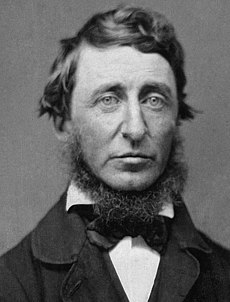
- Henry David Thoreau .

" If you build castles in the air, your work need not be lost. That is where they should be. Now put foundations under them."

Aim high and dream big but build up enough of your life in that direction so that one day you can stand upon that work and it will hold you up. You need enough to hold up your dreams so that when you finally get there, you're able to stand upon them without having the castle come crashing down to earth. Find a way for the earth to meet your dreams, that way your dreams are more of a reality than if they're forever up in the air. But you must dream otherwise you have nothing to build up to.

After studying at Harvard and growing exceedingly close to his brother John, Henry David Thoreau was further traumatized from witnessing the death of his brother . This damage further pushed Thoreau to continue to read and write and grow, inspiring him to move to Walden pond. Writing his first book there, he also spent much time exploring nature and ways of life. After two years Thoreau returned home where he then spent 9 years rewriting his book to perfection concerning his experiment of living at Walden, finding great joy in things that most wouldn't be able to see. People often identified him as the "hermit in the wilderness." He had always been able to question and wonder in ways that most couldn't. Never attempting to push his way of life upon others, Thoreau was on a quest to find harmony within himself and relate that to his social, political, and cultural surroundings. Emerson once defined his as "the bachelor of thought and Nature".


Saturday, 29 October 2011

- Consequence of Sound .


" My rhyme ain't good just yet,
My brain and tongue just met,
And they ain't friends, so far,
My words don't travel far,
They tangle in my hair,
And tend to go nowhere,
They grow right back inside,
Right past my brain and eyes
Into my stomach juice
Where they don't serve much use,
No healthy calories,
Nutrition values.
And I absorb back in
The words right through my skin
They sit there festering inside my bowels."


Consequence of Sound by Regina Spektor . 

Friday, 28 October 2011

- In Response To Directing .

 My directing project was more difficult that i had imagined at times, though i think that pending the last minute switch, it was a success. Trying it first hand allows you to realize how important communication is, and in response it turned out to be much more successful than i would've thought. During class time, the communication with my actors turned out to be successful, aiming for more of a democracy than a straight up dictatorship. My actors seemed to respond well to it and it helped avoid any conflicts concerning decisions making. The biggest problem with communication from my actors was Chrissy not showing up to our final preparation class. We were on track, but had no flex time to end up on track by the end of the class especially if Chrissy wasn't there with her lines memorized and she was the focus of the skit. My first reaction was to dismiss her, and find a way for our group to have a project by the end of that class that would be as close to presentation-ready. At that point i realized how beneficial it was to have made a mind map of the initial ideas we had made from our first class of the project and because of this we were able to pick out our next two strongest ideas that would work with a maximum of 3 actors, instead of 4. This saved us a lot of time. By the end of that class, we were able to have the full layout of our skit and our lines memorized. It was at this point that i had made the decision that IF Chrissy were to show up the next day and had a valid excuse for missing class that i would let her step in as the waitress, which is a rather small part, but it was still beneficial because Chrissy still got a chance to participate as well as i got the chance to spend the last 45 minutes prior to presenting where i could watch the group and make the adjustments that being in the skit itself made it difficult to see. By the time we were ready to present, i felt as if we could pull it off, though one more day would've allowed us to clear up the confusion at the end. I think we did a good job at developing the two distinct atmospheres, though the conflict, because of being so chaotic in nature, was a little undeveloped. Chrissy not showing up was a challenge to our group but i feel as if we had a better outcome because of the pressure last minute. If i were to do it again, i think i would do relatively the same thing, possibly thinking through the clarity from an outside perspective, regardless of time limitations.

Wednesday, 26 October 2011

- Gytis Padigemas .

" Think possibility . "
If you're never thinking possibility your brain will simply cling to the probable rather than the possible. In this, you will be withheld from more than imaginable and you'll be stuck in a box. If you think possibility, you're rather thinking uninhibitedly, rather than confined. Possibility doesn't mean it has to currently exist, and that's where the imagination comes in. To think possibility is to step out of that box and open up your mind to all that could be, rather than what simply already is. 

Tuesday, 25 October 2011

- Lau Tzu .

" For all things difficult to acquire, the intelligent man works with perseverance. "


"The journey of a thousand miles begins with a single step."

Sunday, 23 October 2011

- The Great Mediocrity .

This week has been driving me mental thinking about the "great mediocrity" and such. Such as what power does one in the top portion of the pyramid have over those beneath them? The thinkers, the great minds, even the doers exist at the top. So if they are the ones who take the control, start the projects, make a name for themselves, then what are the entitled to regarding the other groups?
On Friday Hayley, Emma, and I participated in the river cleanup led by the janitor (who in fact, McCarthy constantly talks about how he exists on top). While we were going through and getting the garbage from the riverbanks and surrounding areas, we came across many homeless people who happened to be sleeping or just existing where they are used to existing. As we went down the riverbank, we came across this full camp setup, consisting of sleeping bags, sweaters, boxes, and fencing, that was unoccupied at the time that we passed it. The first thing that came to my mind was that someone called that home. All three of us left it, and continued on, leaving it alone, though the janitor proceeded to tear it all down, and throw it into garbage bags to be thrown out. From that perspective, i cant understand his thinking. It's mid-october, the overnight frost is beginning to set in, this is everything that this man has accumulated and obtained in the past bit, and since he decided to go out and do who knows what for however long he was gone, he now only has the clothes that were on his back when he left. What if that man decided to leave that day in search of a job, in search of support, to start his journey to the top of that pyramid? What entitled the janitor to tear down the life that this man may have possibly started to build up in hopes of a better tomorrow? I cant stop thinking of what that man must've thought when he returned to find all of his possession gone. So tomorrow, Hayley and I are going to talk to the janitor to find out his perspective on why it was so important that all of his stuff had to be thrown out. It was supposed to be helping out the community, but for some reason,  felt for that one man, i had hurt the community more than helped it.

Thursday, 20 October 2011

- Life Objectives .


I think I’m the prime example of the great mediocrity, and it’s not something I’ve grown to be proud of. I live my life doing everything at an acceptable level, being decent at most things, and great at none. I live my life with an odd mindset that takes some risks, and fears the others. I think my anxiety gets in the way of my superobjective, whatever that may be, and helps keep me stuck within the great mediocrity. I fear the wrong things, and take the wrong risks, leaving me relatively in the same place I would’ve found myself in two years ago. I think part of the reason that I have such difficulty with choosing a superobjective is the idea of our entire life falling underneath it. My life, from the way I see it, has been split in half. Before I was injured, I was fearless. I approached everything head on and if I were still that same person, I’d say my superobjective would simply turn out as “to be”. I wanted to be great at everything I did. I was convinced I had the world at my fingertips and that I could be anything and everything I would’ve ever wanted. I was athletic; I wanted to be on top. I was academic; I wanted to be as smart as my mind allowed me to be. I was optimistic; I wanted to be happy. And at that point, I had the drive to get me there.  Once I fell, fear came in and took away that overall longing to be great. Everything I wanted to be, and every answer I searched for seemed to rub in my face how much I am NOT capable of, and how much I have to restrain myself from the things I love. So since I fell, I’ve lost touch with the person who metaphorically carried the umbrella labelled “to be”, and I feel as if the newer me has lost that umbrella all together. Is it possible to obtain more than one superobjective in your life? They say that once the superobjective has been achieved or completed, then that is where it all ends. It is possible to say that my life ended when I fell, and I started a new one? Or is that a portrayal of having violated my superobjective for over 3 years and as a result it’s led me to living a life of mediocrity. I could say my superobjective is now “to survive” but that would simply be saying that I’ve chosen to lead my life at the mediocre level just from getting by on a day to day basis. Some days I’m more than that though. Some days I wake up and I can still feel the world at my fingertips, but that doesn’t last long. I could say that I’ve turned my direction in life to “search”, but I feel that it’s unjustifiable in relation to most days. Could it be “to find”? I’m always looking for answers, for stories, and especially for cures; to find approval, to find life in the smallest things, and to find hope in other people. The idea of being virtually two separate people still scares the shit out of me, and within that, I don’t know if I’ll ever find the person who initially wanted “to be” everything, but is it possible to have more than one life objective? Is it possible to carry two separate umbrellas in your life? The similarities between me now and Morgan Louise 4 years ago are ultimately non-existent. Is it possible to come back from that, and still be great?